Currently Empty: $0,00


Description
SEISMOWIN – Complete Seismic Data Management & Analysis Software Suite
SEISMOWIN is an advanced, all-in-one software suite designed for seismology, geophysics, structural monitoring, and engineering applications. Built with an intuitive launcher, SEISMOWIN makes it simple to download, install, update, and manage modules, while also providing quick access to detailed user manuals.
With its modular architecture, SEISMOWIN supports real-time seismic data acquisition, event detection, signal processing, network management, and large-scale data analysis—making it a comprehensive seismic data management solution for research institutions, universities, and monitoring agencies worldwide.
🔹 Key SEISMOWIN Modules & Features
SEISMOSERVER
Enables real-time seismic data transmission from SEISMOLOG and LOG-EDU to any server using the SeedLink protocol, ensuring seamless integration with national and international seismic networks.
SEISMOLOG (Core Module)
The backbone of SEISMOWIN, designed for complete network data flow management, including:
✔ High-precision data logging with DATALOG
✔ Intelligent event detection and storage
✔ Continuous seismic monitoring with DRUM and FFT-DRUM visualizations
SEISMOLOG-EDU
Purpose-built for education and research, this module records seismic data from the EduGeo serial recorder.
🔹 Requires drivers to be installed before first launch.
SEISMOLOG-MT
Specialized in HVSR (Horizontal-to-Vertical Spectral Ratio) measurements via GeoBox acquisition, delivering accurate insights for geophysical and structural studies.
🔹 Drivers must be installed before use.
SEISMOCONV
Converts seismic datasets into multiple file formats, ensuring compatibility and optimized data processing across all SEISMOWIN modules.
SEISMODESK
A powerful event analysis module that:
✔ Processes seismic events detected by SEISMOLOG, SEISMOLOG-EDU, and SL06 sensors
✔ Supports both automatic and manual event detection
✔ Enables precise event location and declaration
SEISMOSTRU
A professional tool for seismic network design and management, allowing users to:
✔ Define station codes and metadata
✔ Manage crustal models
✔ Track network modifications and station health status over time
SEISMOSURVEY
Provides advanced tools for seismic signal analysis, including:
✔ Custom signal filtering
✔ FFT (Fast Fourier Transform) calculations
✔ Advanced seismic data processing methods
SEISMODRUM & SEISMODRUM-FFT
Transforms DRUM and FFT-DRUM files generated by SEISMOLOG into easy-to-use image files for visualization, reporting, and archival.
SEISMONET
A reliable FTP client that automates periodic uploads of seismic data to secure servers, ensuring safe remote access and storage.
SEISMOREPORT
Dedicated to seismic event management, this module:
✔ Aggregates events from SEISMODESK and official seismic organizations
✔ Displays real-time seismic event data on an interactive world map
SEISMORESP
Automatically generates RESP files for seismic data deconvolution, ensuring consistent and accurate results across various applications.
SEISMOSCAN
Designed for large-scale seismic data analysis, SEISMOSCAN can:
✔ Analyze extensive DATALOG files
✔ Assess seismic dataset coverage over time
✔ Identify and extract seismic events from massive archives
🌍 Why Choose SEISMOWIN?
- All-in-one seismic software – integrates acquisition, monitoring, conversion, and analysis
- Modular & scalable – tailor to small labs or large national seismic networks
- User-friendly launcher – seamless installation and updates
- Trusted worldwide – by research institutions, universities, and government agencies
✅ SEISMOWIN is the complete solution for managing seismic data—from acquisition to real-time analysis—making it the ideal software for geophysical research, earthquake engineering, and seismic hazard monitoring.
SEISMOLOG
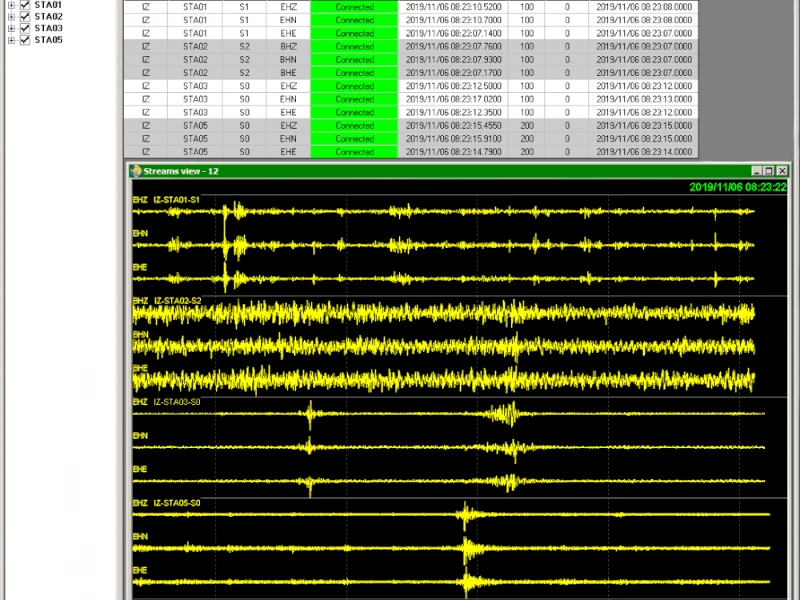
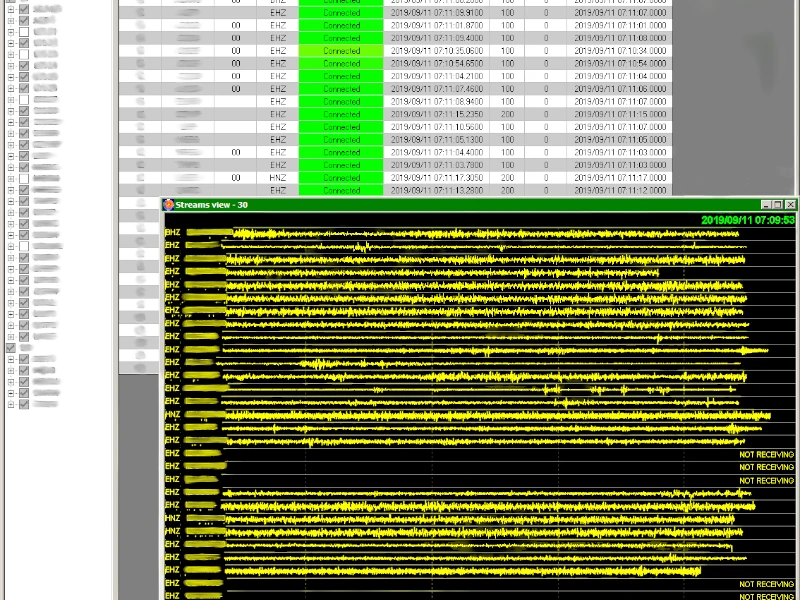
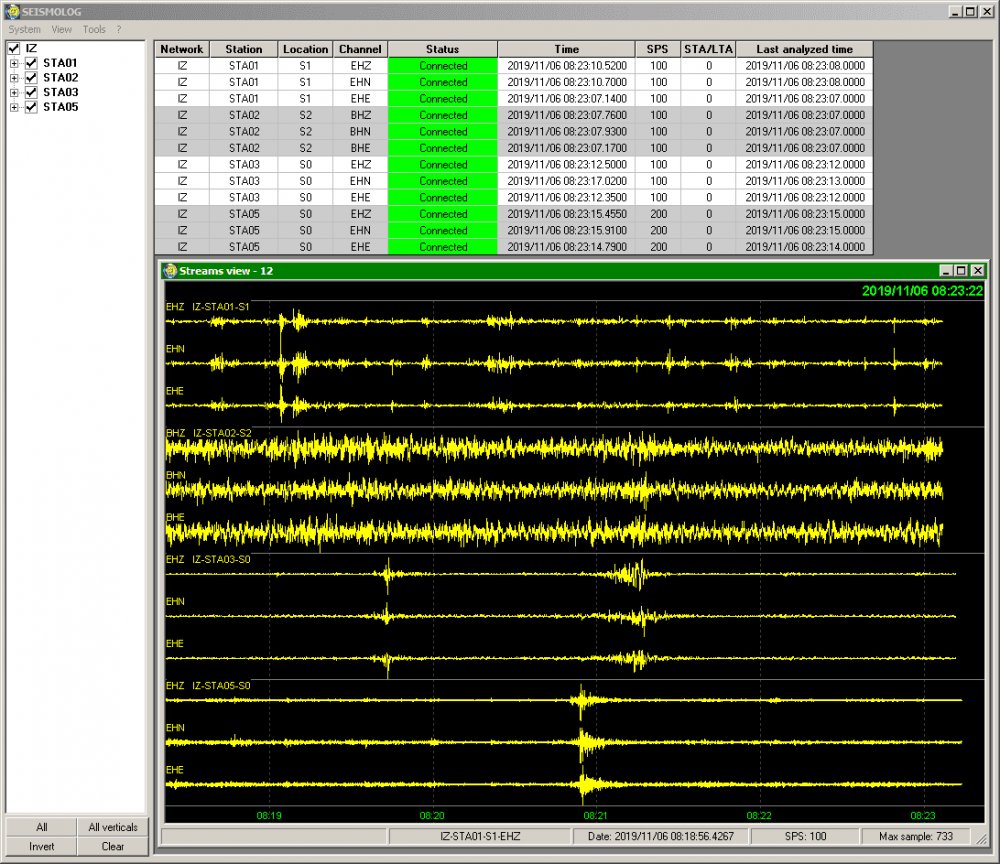
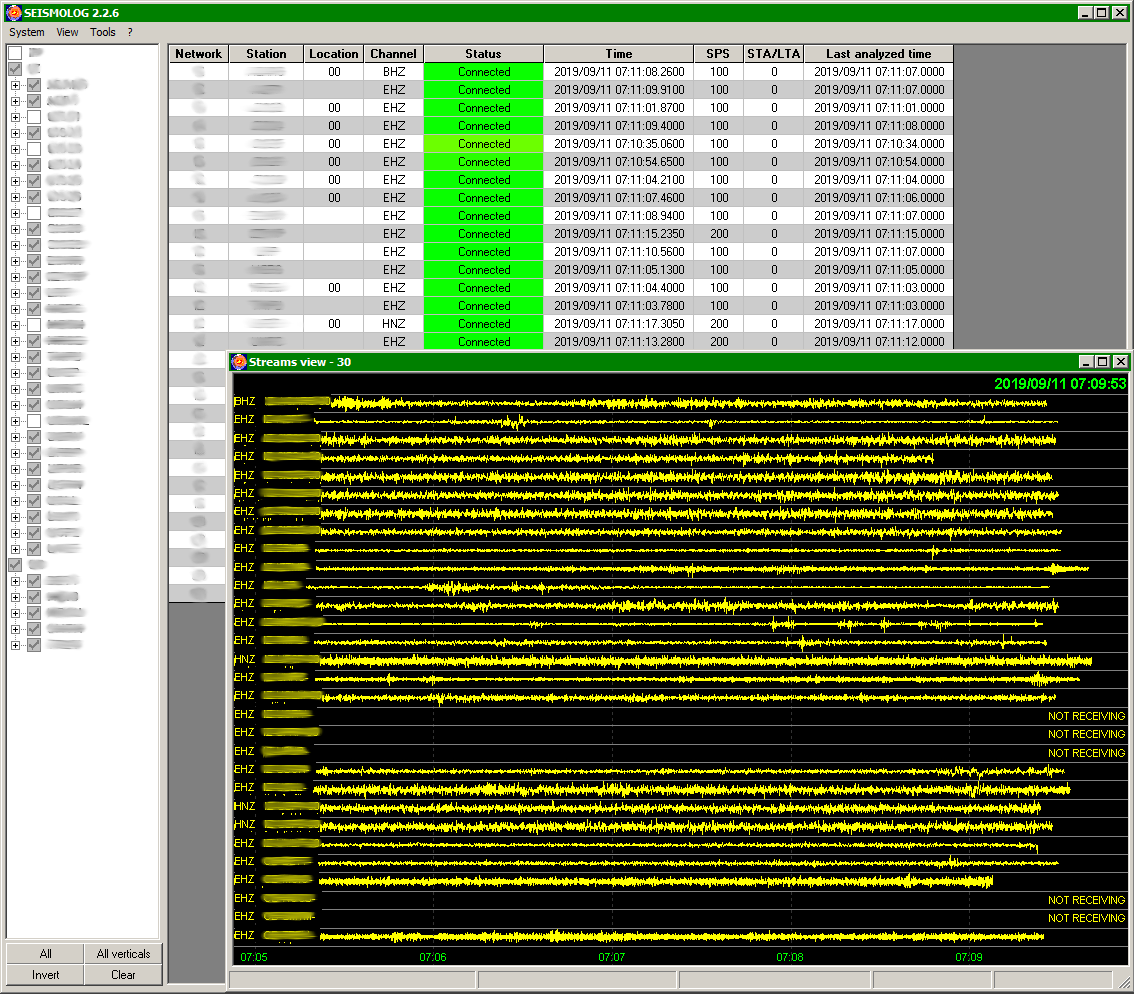
This software, included in the SEISMOWIN suite, is able to simultaneously acquire from the network the signal of multiple seismographs, biaxial, triaxial or multi-axial.
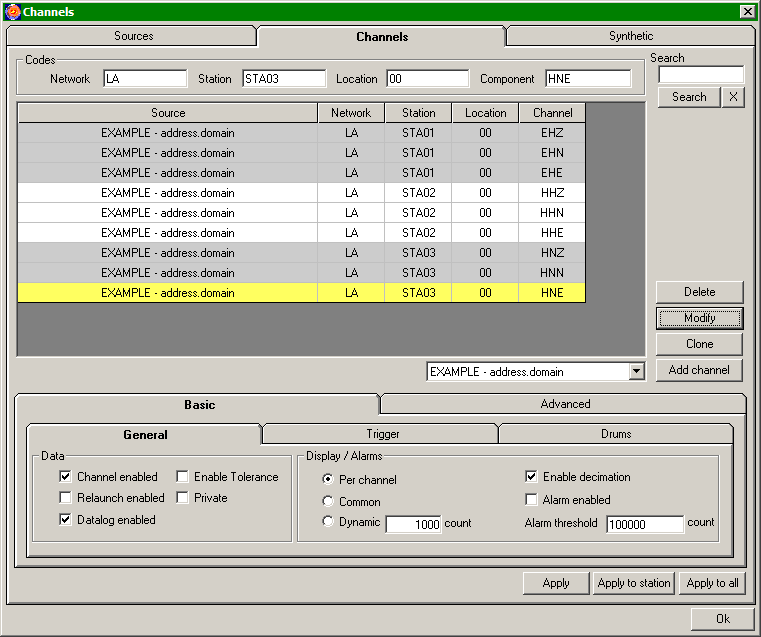
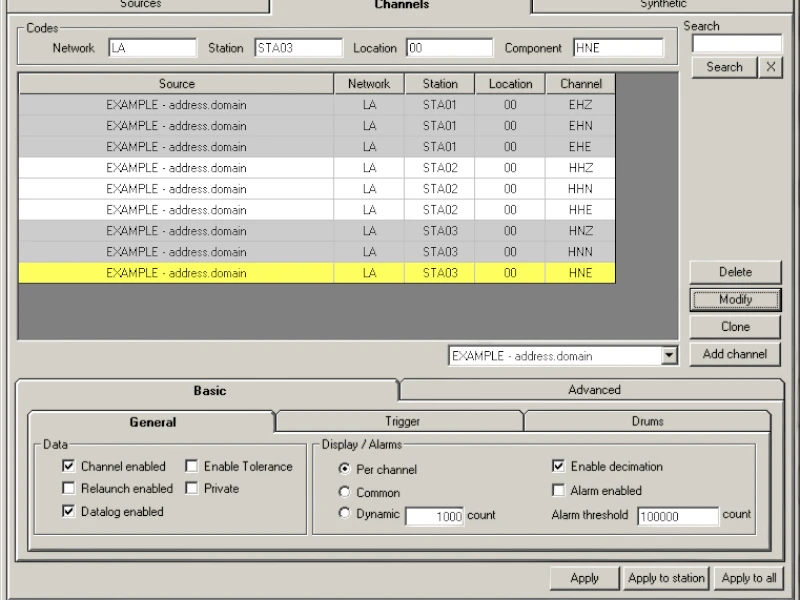
SEISMOLOG stores all data acquired on a local or shared disk. It is able to carry out triggering in width or STA / LTA of events, which are automatically saved in a customizable folder. Furthermore, thanks to the simple and intuitive interface and the automatic search for channels in a station or server, making the program operational takes very little time.
Others functions of SEISMOLOG:
- Multi-window display management.
- Automatic deconvolution.
- Production of station health status files, readable by SEISMOSTRU.
- Automatic storage folder cleaning function.
- High pass and low pass filters in real time.
- Generation DRUM 24H and DRUM FFT.
- Synthesis of the input signal for duplications.
- Conditional triggering between channels and stations (requires the generation of a station database with SEISMOSTRU).
SEISMODESK
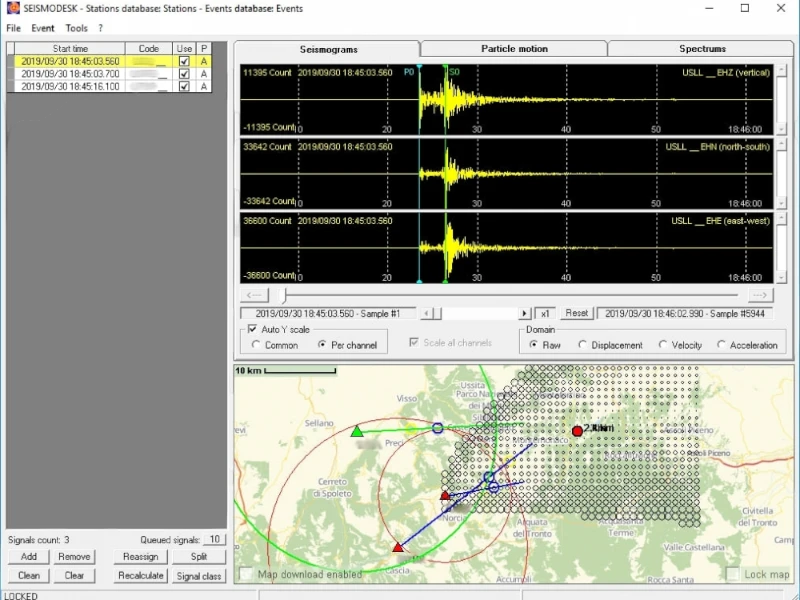
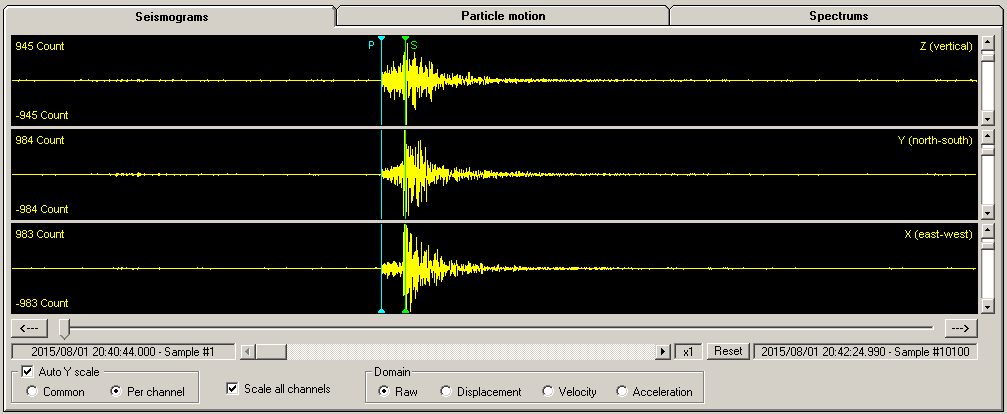
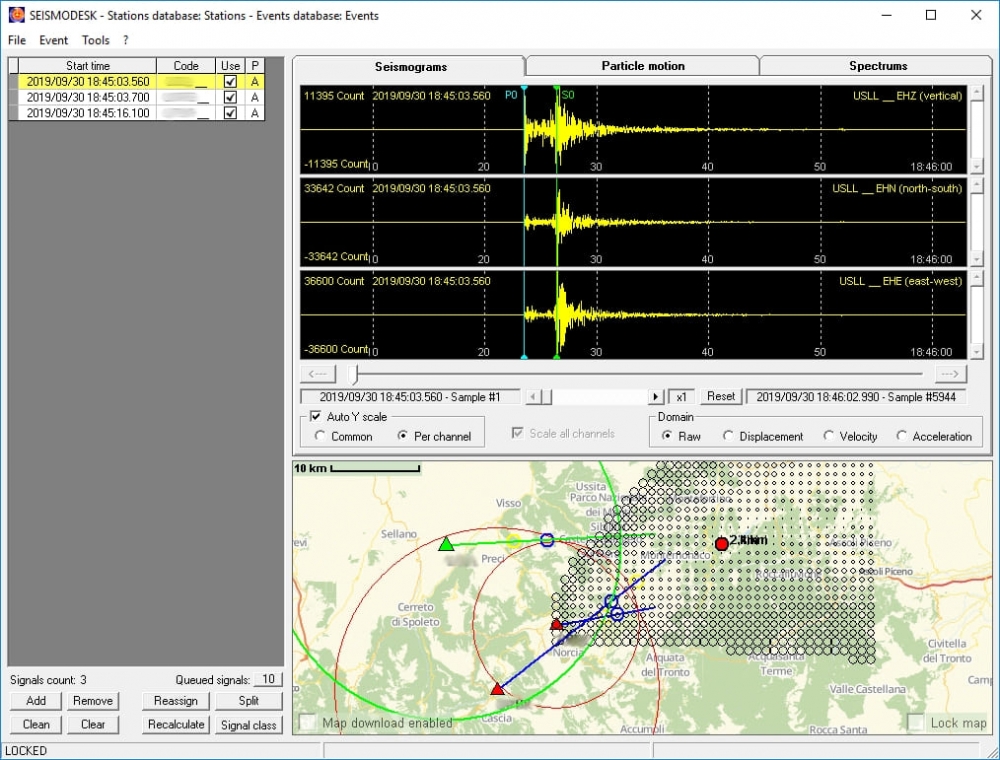
Thanks to SEISMODESK, by associating signals recorded by various stations, it is possible to define events localized in space and time. Of each signal it is possible to visualize the seismogram to identify the arrival times of the P and S waves, the frequency spectrum, and the particle motion to define the angle of origin of the event.
Taking advantage of the features of the SEISMOCONV module, SEISMODESK can load signals recorded in different formats in the work environment. SEISMORESP allows the creation of sensor response files (RespFile), which will be automatically loaded by the program for the complete analysis of the signals. SEISMOSTRU allows you to create the database in which the positions of the known stations, their component codes and the various crustal models that can be used will be saved.
All the localized events are saved in a database, SEISMOREPORT can then display the report of the events located on the map and create reports, automatically dividing them even on social networks.
SEISMOREPORT
This SEISMOWIN module allows you to view all events located by SEISMODESK, offering a real-time reporting service.
SEISMOREPORT periodically queries a database shared with SEISMODESK or a network source such as the INGV seismic notification feed, with the data it collects from these queries it generates different reporting systems.
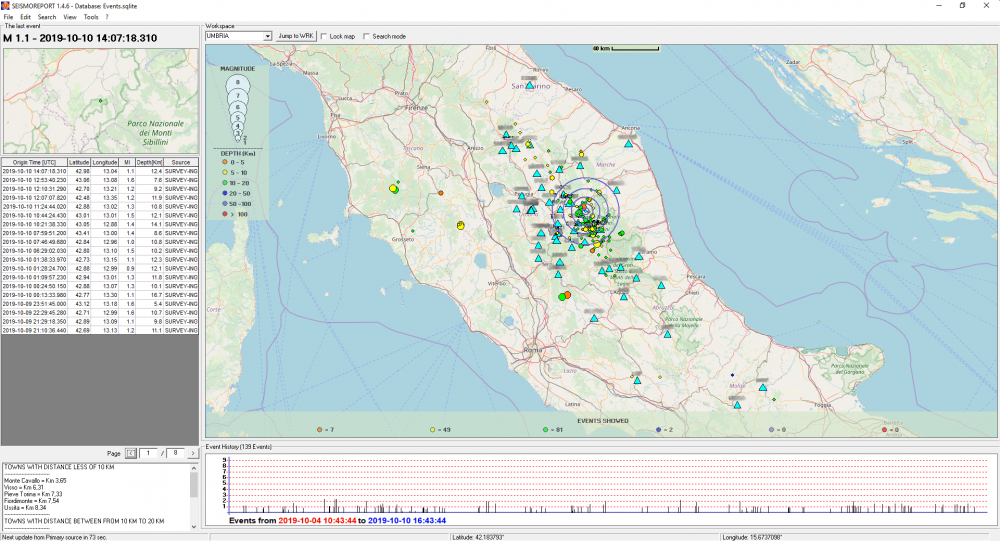
SEISMOREPORT is currently able to generate the following reports:
- Telegram notification of new event, via telegram bots.
- Continuous reporting on Twitter.
- Display distribution of events in histogram.
- Chronology of events.
- Map display in order of magnitude.
SEISMOSTRU
SEISMOSTRU is a SEISMOWIN module that provides the user with many useful and convenient tools to design and maintain a seismological network.
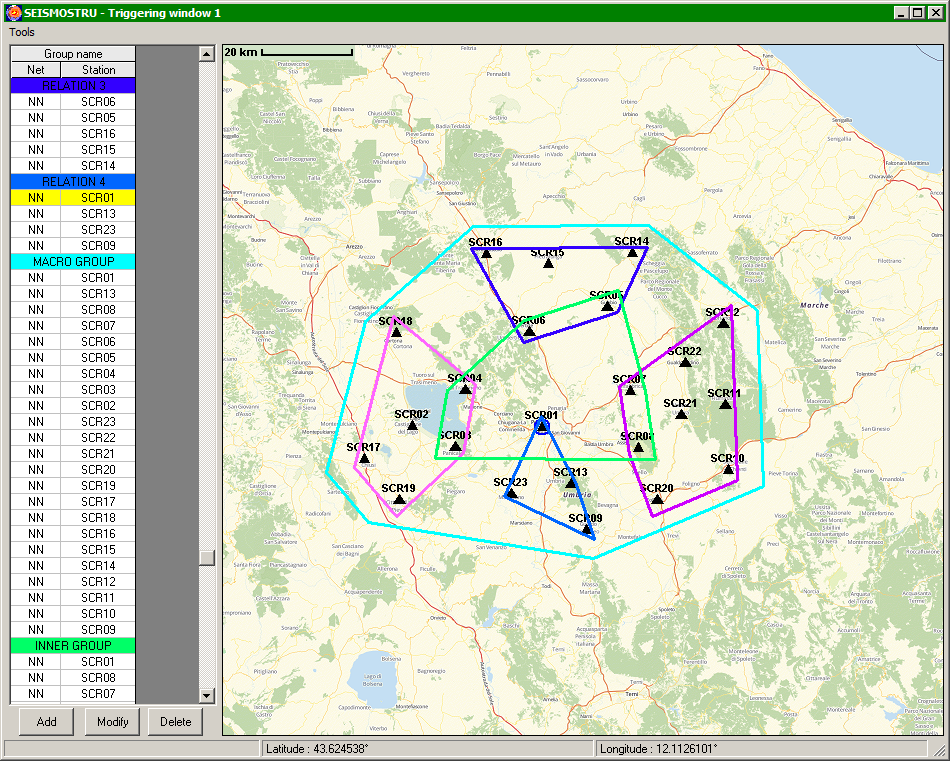
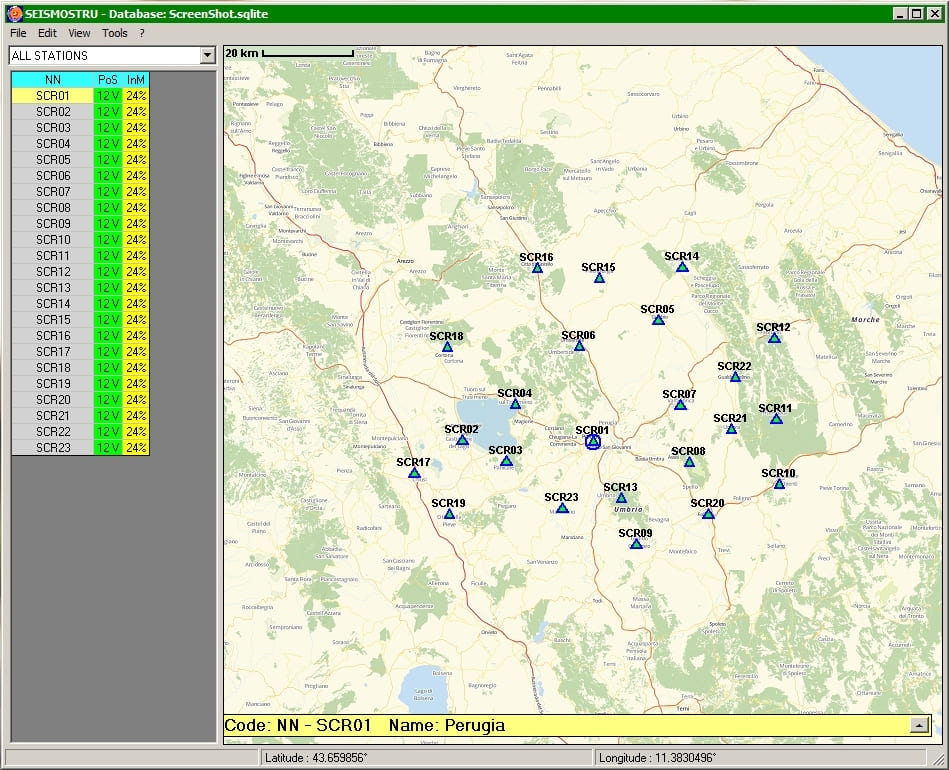
SEISMOSTRU allows you to design the network of stations, providing a station positioning tool directly on the map, using point insertion or drag & drop functions. The health status of each station can be monitored. Our SL06s send a .SOH file to a central server on which runs an instance of SEISMOSTRU, the file contains all the vital parameters of the station and the presence of the file itself ensures the correct operation of the station.
It is possible to keep a history of changes made over time, thanks to the History function of the program that allows you to store the status of the stations, in this way you can keep track of old positions occupied by the station of other sensors used, or other useful information .
Other functions of SEISMOSTRU:
Display of multiple networks in multi-window.
Notify on telegram bot via station health status.
Definitions of relationships between stations to improve and filter the SEISMOLOG triggering function.
Simple editing of the station database.
Display of station status history.
SEISMOLOG-MT
Software present both in the SEISMOWIN suite and in the GEOEXPLORER suite. This module allows you to acquire micro tremors from a bi-axial or tri-axial instrument, connected via a serial cable or via a seedLink protocol, thus exploiting the network.
To use the serial cable the program needs the following drivers:
Serial Drivers USB-RS232 it is necessary to download and install these drivers before using the software.
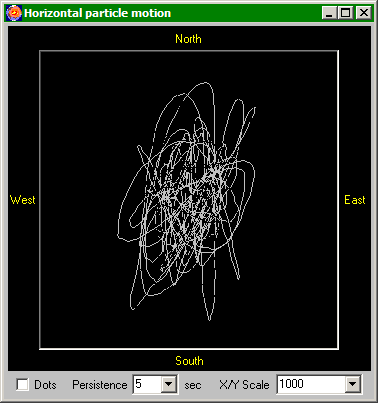
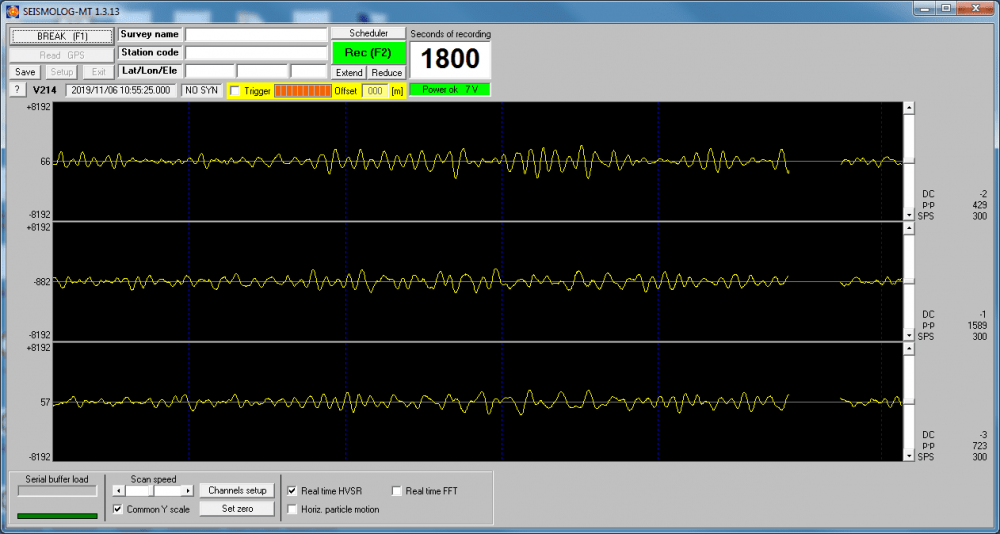
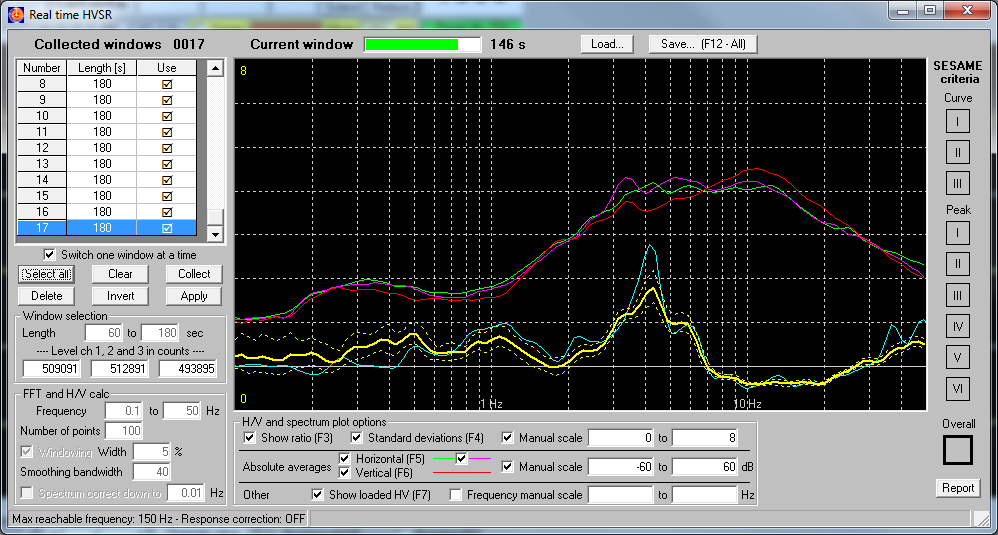
SEISMOLOG-MT is able to show in real time the horizontal particle motion of the instrument, which allows to verify its correct positioning on a surface. Furthermore it is able to calculate in real time the frequency spectrum of the signal being acquired and to collect the data necessary to perform the HVSR in real time.
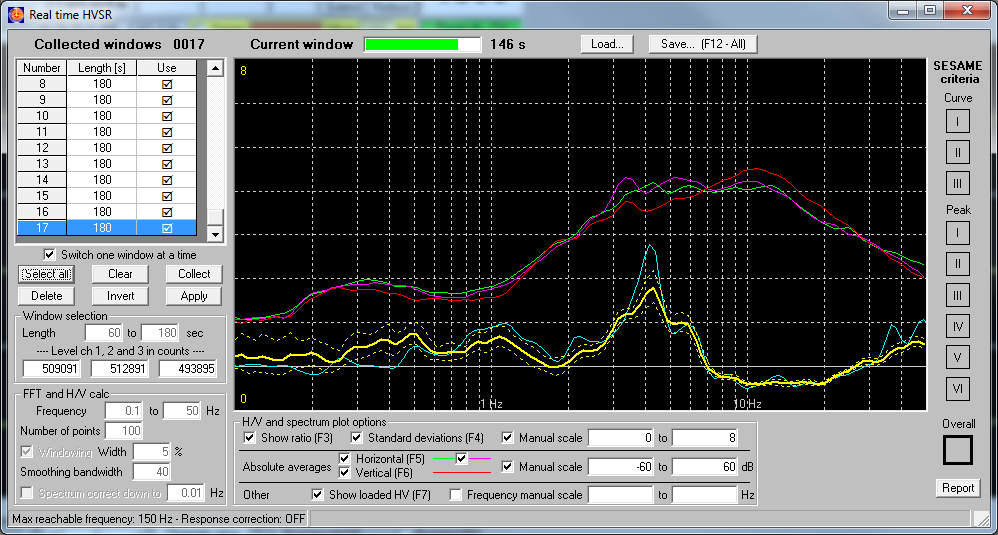
The display window of the HVSR allows you to set the display of the result in many different ways, as well as allowing the definition of windows, such as spike tolerance and duration. Each collection window can be manually excluded from the calculation or deleted. Tracks that represent deviations or the average trend can be hidden or shown thus facilitating the various types of analysis and study available.

SEISMOLOG-EDU
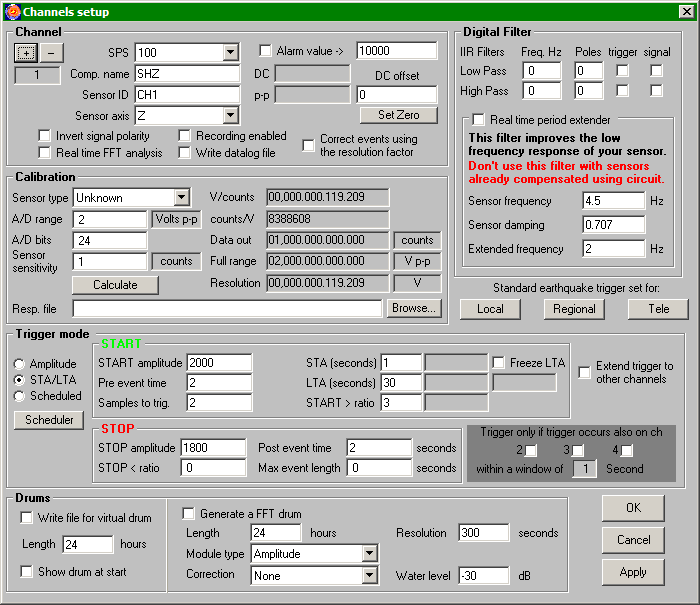
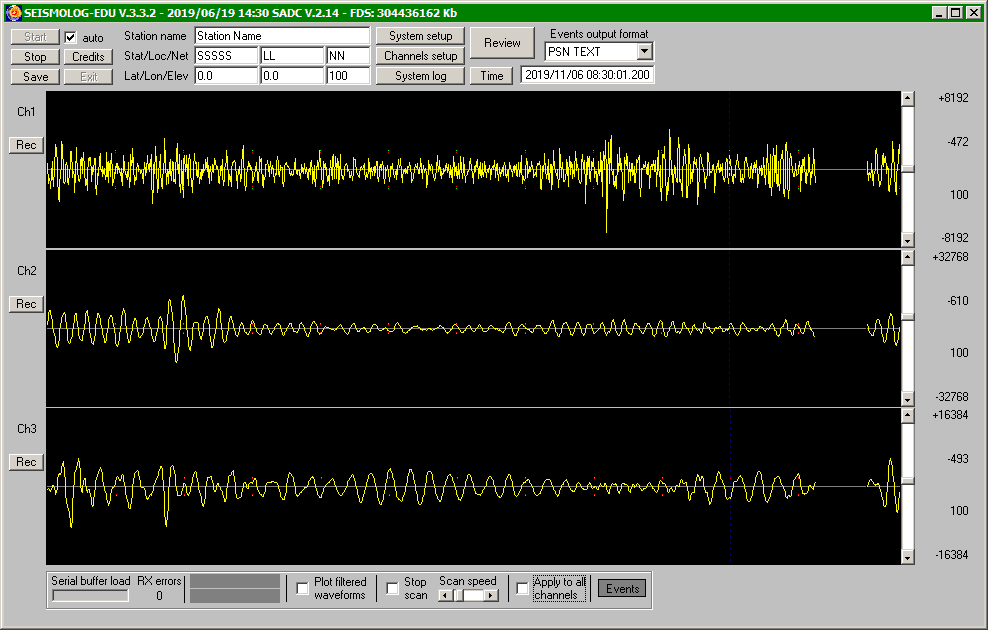
This software has been designed for an educational purpose, but in every aspect it is a solid and reliable tool. Capable of making recordings when a trigger is triggered, applying filters to the data display and generating DRUM24H or .drum files.
It acquires data through the serial port, is compatible with our EDU-GEO and GeoBox acquisition tools. The acquired data can be retransmitted via the SEISMOSERVER module, which uses the SeedLink protocol, to any compatible client.
To use the serial cable the program needs the following drivers:
Serial Drivers USB-RS232 it is necessary to download and install these drivers before using the software.
All data acquired by SEISMOLOG-EDU, by default, are automatically stored on disk. It is also possible to view the archived data using the Review tool, included in LOG-EDU.
SEISMODRUM
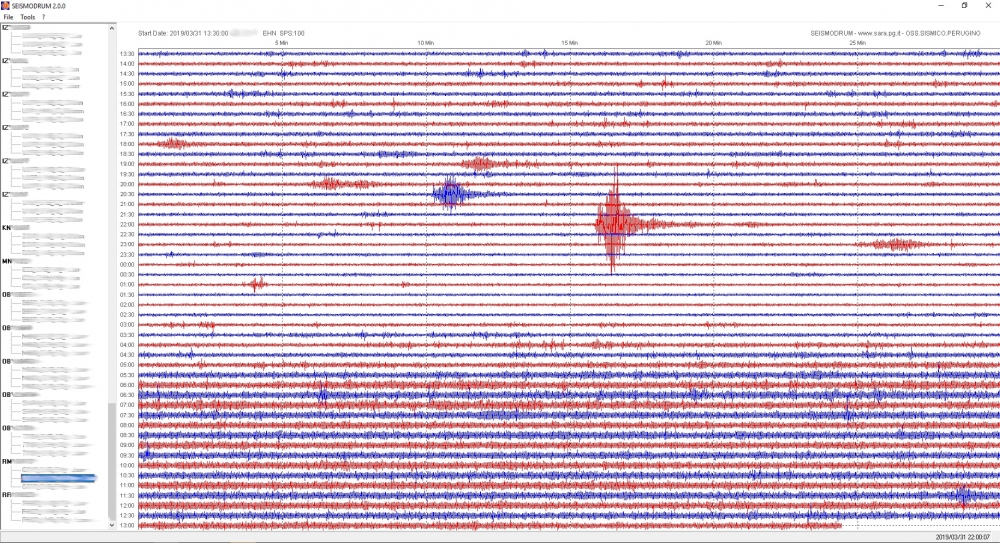
This SEISMOWIN module periodically generates an image of the .drum file generated by SEISMOLOG or by SEISMOLOG-EDU. The image can be periodically uploaded via SEISMONET in a server so that it can be incorporated into the pages of a website.
SEISMODRUM stores the full 24H image at midnight every day, so you can get a record of the recording days.
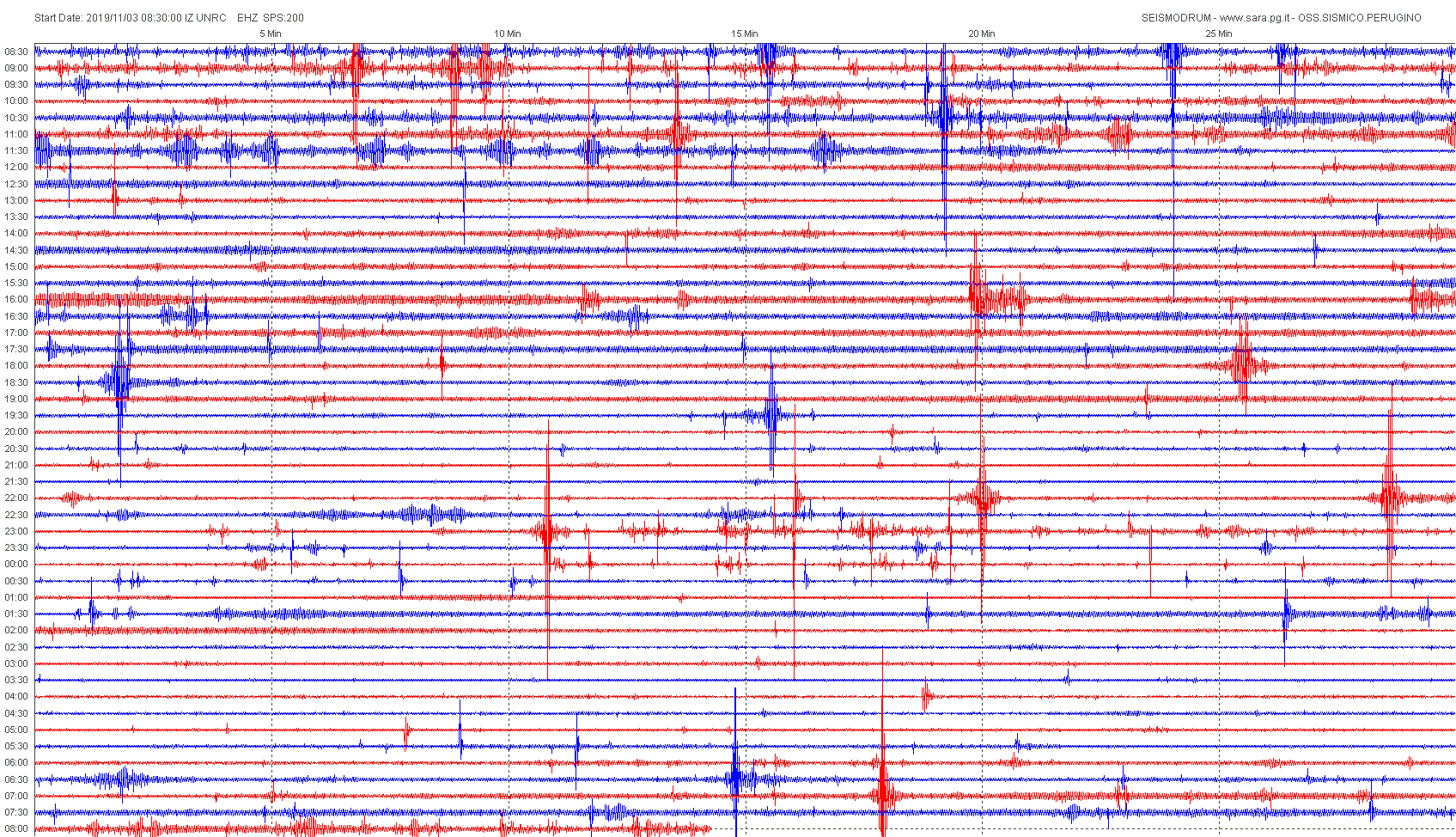
It also offers the following features:
Monitoring of a selection of .drum files.
Automatic update of image files.
24-hour file storage.
Selection of colors and representation scales.
Setting the update rate.
SEISMOSURVEY
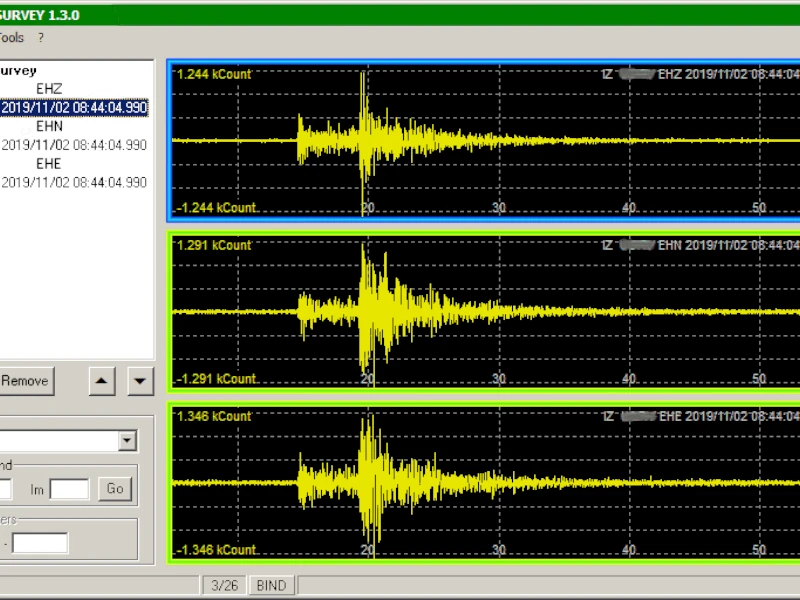
Post production software for seismic signals. It allows to make cuts, zoom, filters, FFT representation, deconvolutions and much more on any type of seismic signal. Thanks to the SEISMOCONV module it is possible to import almost any type of seismic format.
SEISMOSURVEY currently includes the following features on the single track:
- Detrending
- DC removal
- Resampling
- Filters
- FFT representation
- Period extender
- Representation in histogram
- TFA chart
- Audio track player

SEISMOSURVEY currently includes the following features on multiple tracks:
- Sum
- Subtraction
- Division
- Multiplication
- Quadratic mean
- Spectrum rotation
- Whole wheat
- Derived first
- Second derivative
- Deconvolution
- Correlation
- Alignment
SEISMOSERVER
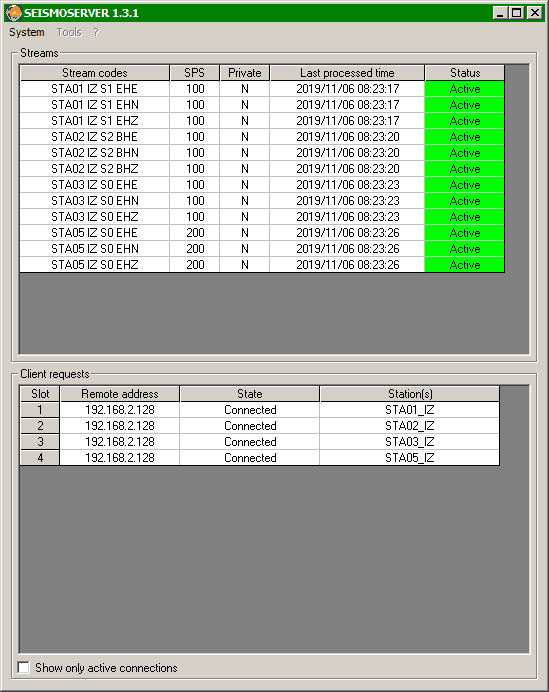
SEISMOSERVER is our seedLink server and is able to serve on the network the data acquired in real time by SEISMOLOG or by SEISMOLOG-EDU. This software allows you to create a seismic server, on a Windows operating system, in a simple and immediate way.
After setting which channels you want to make available on the network it will be sufficient to start the program and the transmission to have a fully functional server.
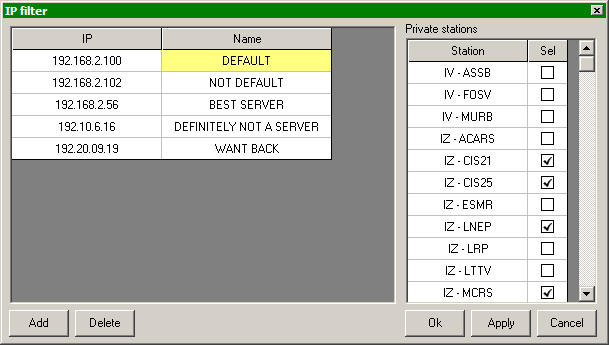
SEISMOSERVER also offers security features such as:
- Blacklist, prevents a certain address from taking data.
- Whitelist, allows only known addresses to collect data.
- Make outgoing data private (only with SEISMOLOG source).
- Make streaming visible only to certain IP addresses leaving others public.