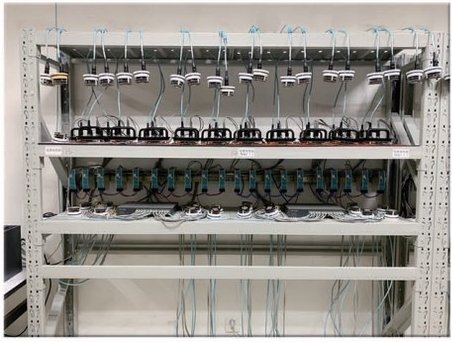
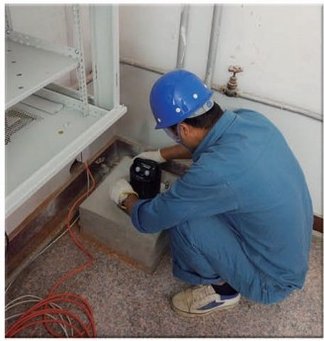
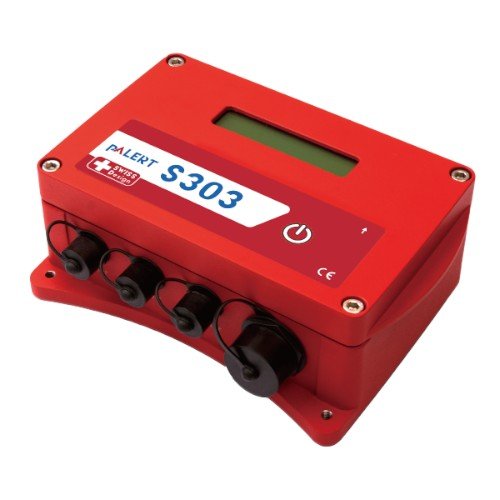
The GL-PA4 is an integrated seismic observation instrument combining multiple functions including acceleration sensing, data acquisition, storage, transmission, and detection. It contains a 24-bit data acquisition unit, a force-balanced accelerometer, a data storage module, network communication capabilities, and a GNSS time synchronization unit. The force-balanced accelerometer detects triaxial vibration acceleration signals and converts them into proportional voltage outputs for vibration measurement. Comprising three independent orthogonal sensors acquisition unit processes voltage signals from these sensors via three high-resolution, wide-dynamic-range channels that deliver real-time data streams with ultra-high synchronization accuracy. It supports multi-sampling rates, achieving 138dB dynamic range at 50-point sampling. The unit features a large-capacity industrial-grade CF card storage for long-term recording of continuous data, event data, and calibration data. For detailed strong-motion calibration, it records seismic calibration data at 500-point sampling rate. Multiple sampling rates can be transmitted in real-time via network to the seismic network center. Additionally, the triaxial digital strong-motion accelerometer adopts a highly integrated design, offering compact size, lightweight construction, and low power consumption. Data transmission employs low-latency real-time streams with multi-connection support and FTP data download capabilities.
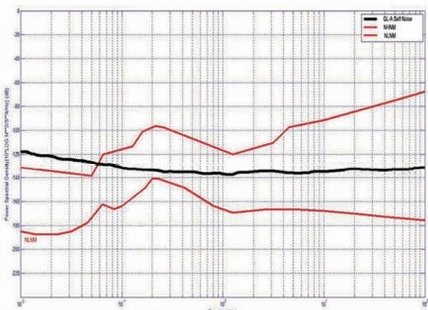
Sensor
Structure: three-way integration, force balance electronic feedback
Range: ±4g
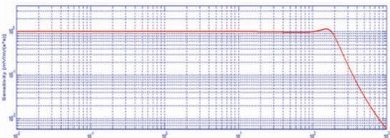
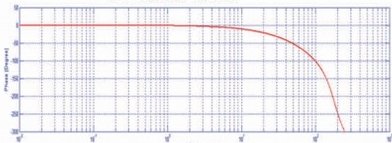
Bandwidth: DC-280Hz (-3dB); Dynamic range: more than 150dB
Nonlinearity: better than 0.1%
Horizontal sensitivity: better than 1%
Output: ±9.3467V (both ends)
Vibration: <500 µg/℃
Adjustment zero: manual
Damping calibration: Yes
Collector
ADC: 24 bits
Dynamic range: greater than 135dB@100sps
Sampling rate: 50sps, 100sps, 200sps, 500sps
Digital filter: linear phase FIR / minimal phase FIR
Distortion: better than -100dB
DAC: 16 bits, maximum output current ±5mA
Calibration signal type: pulse, sine wave optional, support damping free strong earthquake calibration
Start mode: timing, instruction
Interface: LAN Ethernet, WiFi (support parameter setting, data browsing)
Data communication protocol: low delay real-time data network service (Jopens, TCP/IP, FTP)
Overall Machine Performance
Timing: GNSS timing unit / IRIG code input
Time synchronization error: less than 0.01ms
Clock stability: better than 0.5ppm
Output sensitivity: 32000 count/gal (2384 µV/gal)
Power supply: +12V (9V~20V)
Storage environment: -55℃~80℃
Working environment: temperature -40℃60℃, humidity 0100%
Storage medium: 8G/32G/64G/128G industrial wide temperature CF card
Recording method: event trigger recording, continuous waveform recording
Data format: EVT, mini SEED, GEOPEN
Remote monitoring: parameter setting, working status monitoring
Size and weight: φ139mm×154mm, 2.76kg