TELLUS-R: ROTATIONAL SENSOR
Accelerometers - LUNITEK - Seismometers - x
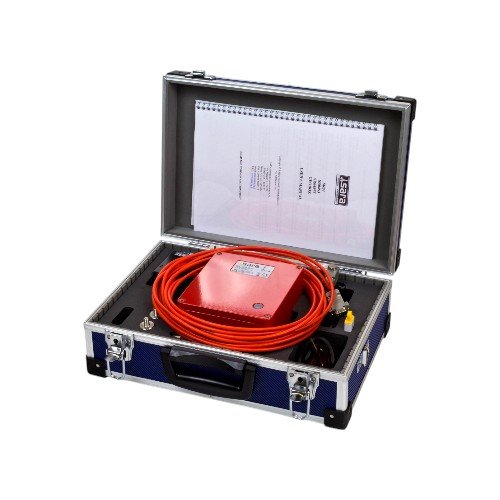
Tellus-R is a high-performance rotational seismometer that measures all six components of ground motion with ultra-low noise and exceptional sensitivity. Compact, robust, and energy-efficient, it is the ideal tool for modern seismic networks, earthquake research, and studying rotational seismic waves in both scientific and engineering applications.
$9.499,00
OVERVIEW
Description
The Tellus-R is a state-of-the-art low-noise rotational seismometer engineered to serve as the cornerstone of next-generation seismic monitoring networks. By recording all six components of ground motion—including translational and rotational—the instrument enables precise detection of rotational earthquake modes, significantly improving the completeness and accuracy of seismic observations.
HIGH PERFORMANCE
Delivering a resolution of 6 × 10⁻⁸ rad/s at 1 Hz, the Tellus-R provides unmatched sensitivity across a 117 dB dynamic range and a frequency response of 0.033–50 Hz (optional 0.01–100 Hz). With an exceptionally low self-noise PSD of –125 dB (rel. 1 rad/s² Hz), it ensures ultra-quiet operation. Power efficiency is another advantage: consuming only 30 mA at 10–18 VDC, it outperforms traditional electro-mechanical and fiber-optic sensors. An integrated calibration input (1:1) allows for straightforward periodic verification without specialized external equipment.
ROBUST DESIGN
Built for long-term deployment in demanding field conditions, the Tellus-R is housed in hard-coated anodized aluminum with IP67 protection (IP68 optional). Compact and lightweight (Ø180 mm × 140 mm, 2 kg), it operates in any orientation, with a temperature range of –15 °C to +55 °C (optional –40 °C to +55 °C). A 3-meter rugged cable and PT06E-14-19P(SR) connector are supplied standard, with full customization available.
APPLICATION AREAS
The Tellus-R is purpose-built for advanced seismology and engineering applications, making it a perfect instrument for studying rotational seismic waves:
- Earthquake Science: Detecting rotational components of seismic waves for improved source characterization and rupture dynamics.
- Structural Engineering: Measuring rotational motions in buildings, bridges, and critical infrastructure for seismic resilience studies.
- Seismic Hazard Assessment: Enhancing the accuracy of ground motion prediction models by incorporating rotational data.
- Seismological Networks: Integration into modern arrays for six-degree-of-freedom (6-DOF) earthquake monitoring.
- Microseismic and Industrial Monitoring: Recording subtle rotational motions in experimental, geotechnical, or industrial environments.
Why Tellus-R?
Rotational Seismology is an emerging field that delves into the study of all forms of rotational motions triggered by earthquakes, explosions, and ambient vibrations.
In the context of vibration caused by an earthquake, the overall motion of particles or a small volume within a solid body can be broken down into three components: translation (along the x, y, and z axes), rotation (around the x, y, and z axes), and strain (e.g., Båth, 1979; Teisseyre et al., 2006).
For centuries, rotational ground motion was largely disregarded, with a prevailing belief that rotation held little significance in measurement. However, recent insights have shifted this perspective, suggesting that rotational signals might contain valuable additional information for analyzing wave propagation. Furthermore, rotational ground motion could play a crucial role in the excitation of certain engineering structures.
As highlighted in a special issue of the Bulletin of the Seismological Society of America, rotational seismology has rapidly evolved into a burgeoning field, exploring every facet of rotational ground motion stemming from earthquakes, explosions, and ambient vibrations. This domain has garnered the interest of researchers and structural engineers spanning various geophysical disciplines.

A complete seismic station
You can build your complete seismic station using a 9-channel ATLAS datalogger and get accelerometer data from the force balance accelerometer LTFB-160, the very broadband velocimeter TELLUS-30s-60s-120s, and the rotational sensor TELLUS-R.
Key Features
| Channel | XYZ Rotational |
| Resolution | 6*10-8 rad/s at 1 Hz |
| Output Signal | +/- 20 V differential, 0.4 rad/s |
| Dynamic Range | 117dB |
| Selfnoise PSD | -125dB (rel. 1 rad/s2/√Hz) |
| Frequency range | 0.033 – 50 Hz (opt. 0.01 – 100 Hz) |
| Generator Constant | 50 V/rad/s |
| Mass Centering | none |
| Installation Angle | any |
| Calibration Input | 1:1 |
| Power Supply | 10-18 Volt DC |
| Power Consumption | 30 mA |
| Dimension | 180mm OD Height 140mm |
| Weight | 2Kg |
| Op temp | -15 to + 55 C (opt. -40 to + 55 C) |
| Protection | IP68 |
| Compliance | CE |
| Housing | Anodized Aluminium |
| Cable | 3m standard or custom |
| Connector | PT06E-14-19P(SR) |