- Home
- Accessories & Parts
- Data Storage
- QuakeVault
QuakeVault Rugged Edge Server for Seismic, Infrasound and SHM Data Retention & Analytics
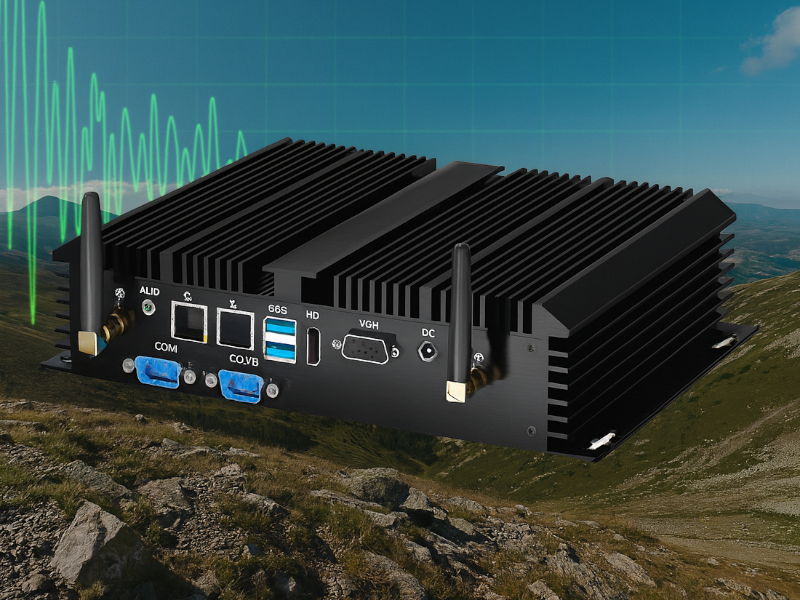
QuakeVault is a rugged edge server for permanent seismic, infrasound and SHM data retention and analytics. RAID 1 mirrored SSD storage, embedded SeedLink-compatible wave server, time-indexed MiniSEED archiving, web dashboard, RESTful API and a full real-time wave analytics suite — in a fanless industrial unit rated -20 to +60 C. Available in Seismic and Infrasound Monitoring configurations.
- Permanent MiniSEED archive on 2 × 1 TB SSD, RAID 1 mirrored
- SeedLink-compatible wave server — Earthworm, FDSN & Winston interoperable
- Real-time wave analytics, web dashboard and RESTful API built in
- Fanless industrial design, −20 °C to +60 °C operation
Questions before ordering? Call +1 916-899-0391 or email sales@quakelogic.net.
Overview
QuakeVault is QuakeLogic’s next-generation rugged edge server for permanent seismic, infrasound and structural health monitoring (SHM) data retention and analytics. Built on fanless industrial hardware with RAID 1 mirrored SSD storage, it archives continuous waveform data in time-indexed MiniSEED format while serving it in real time through an embedded SeedLink-compatible wave server, web dashboard and RESTful API.
QuakeVault ships with two integrated software layers: QuakeVault DataHub, a high-performance wave server that buffers and distributes real-time data to multiple clients with sub-second latency, and QuakeVault Real-Time Wave Analytics, a full analysis suite with helicorder, spectra, spectrogram and particle-motion views, RSAM alarms, phase picking, Hypo71 event location and QuakeML export. Choose the Seismic Monitoring or Infrasound Monitoring option to match your sensor network — from earthquake and volcano observatories to AI data center infrasound noise monitoring.
Key features
- Rugged fanless industrial edge server engineered for 24/7 seismic, infrasound and SHM data retention.
- Permanent, time-indexed MiniSEED archive on 2 x 1TB SSD with RAID 1 mirroring for data redundancy.
- Embedded SeedLink-compatible wave server; interoperates with Earthworm, FDSN Web Services and Winston protocols.
- QuakeVault DataHub streams real-time data to multiple clients with circular buffering and sub-second latency.
- Real-Time Wave Analytics suite: helicorder, wave, spectra, spectrogram and particle-motion views with Butterworth filtering.
- Built-in RSAM viewer with alarm thresholds, coda/duration magnitudes, S-P distance and Hypo71 event location.
- Web dashboard with real-time waveform preview, alerts and system health monitoring from any browser.
- RESTful API for programmatic waveform access, metadata queries and remote system control.
- Secure by design: SSH, firewall and VPN support with OTA firmware and application updates.
- Fanless -20 to +60 C operation with Gigabit LAN and optional Wi-Fi / 4G LTE for remote station deployments.
Technical specifications
Computing
| Processor | Intel Core i5/i7 or AMD Ryzen Embedded |
|---|---|
| Memory | 8 GB DDR4 RAM (expandable) |
| Storage | 2 x 1TB SSD, RAID 1 mirrored |
Connectivity
| Networking | Gigabit LAN; optional Wi-Fi / 4G LTE |
|---|---|
| Interfaces | USB 3.0, HDMI, RS-232, VGA |
Power & environmental
| Power | 12V DC input (AC adapter included) |
|---|---|
| Operating temperature | -20 to +60 C, fanless design |
Mechanical
| Weight | 8 lbs |
|---|---|
| Dimensions (L × W × H) | 15 × 15 × 10 in |
Data, software & security
| Wave server | Embedded SeedLink-compatible; Earthworm & FDSN interoperable |
|---|---|
| Data archive | Permanent, time-indexed MiniSEED storage |
| Web interface | Real-time dashboard, waveform preview, alerts |
| API | RESTful API for data queries and system control |
| Security & updates | SSH, firewall, VPN; OTA remote updates |
Full specifications are in the QuakeVault datasheet (PDF).
Software & analytics
QuakeVault ships with two integrated software layers — the DataHub real-time wave server and the Real-Time Wave Analytics suite. Both are included with the hardware; there is no separate software license.
QuakeVault Real-Time Wave Analytics
1. Multi-Source Data Integration
- Connects to multiple real-time and historical waveform servers:
- QuakeVault Winston Server (proprietary Java-based wave server)
- Earthworm Wave Server
- FDSN Web Services
- SeedLink Protocol
- Direct file-based imports (SAC, SEED, miniSEED, SEISAN, MATLAB text, WIN formats)
- Fully configurable data sources with auto-refresh, status icons, and permission-based editing.
2. Dynamic Helicorder Visualization
- Real-time helicorder display with customizable axes, refresh intervals, zoom, and clipping thresholds.
- Continuous auto-updating for active data streams.
- Auto-scaling and forced centering for broadband stations, audible and visual clipping alerts, and instant snapshot export for reporting and archiving.
3. Multi-Mode Wave Analysis
- Wave, Spectra, Spectrogram, and Particle Motion views for comprehensive signal interpretation.
- Butterworth filtering with adjustable low-pass, high-pass, or band-pass modes.
- Logarithmic or linear scaling, FFT controls, and alternate color spectrums.
- Integrated auto-scaling, bias removal, and velocity calibration for instrument-corrected data.
4. Real-Time Monitoring Dashboard
- Multi-channel real-time waveform viewer with configurable time spans (15–300 s).
- Lag indicator for data latency diagnostics and adjustable refresh intervals for bandwidth-efficient monitoring.
5. Analytical Tools
- RSAM viewer with customizable time spans, binning, and alarm thresholds, plus RSAM ratio analysis between channels.
- Coda and duration magnitude calculations directly from waveform selections.
- S–P time and distance computation for event characterization.
6. Event Processing and Picking
- Integrated Pick Mode for P-, S-, and coda-phase selections with uncertainty weighting.
- Automated S–P distance mapping and coda-based magnitude estimation.
- Hypo71 earthquake location for fixed or non-fixed depth solutions.
- Event export in QuakeML format; event import and visualization from NEIC or local sources.
7. Geographic and Network Visualization
- Interactive map interface with station markers and live waveform overlays.
- Custom map packs and WMS support for high-resolution imagery.
- Distance and azimuth measurement tools; automatic NEIC event plotting by age, magnitude, or depth.
8. Tagging, Classification, and Layout Management
- Tag and classify events directly on helicorder traces (VT, LP, VLP, Explosion, Tremor, etc.).
- User-defined event catalogs (CSV) and custom layouts with “Kiosk Mode” for dedicated displays.
9. Configuration and Automation
- Modular configuration for data sources, velocity models, event classifications, and network metadata.
- NTP synchronization with global time servers for precise timestamping.
- Auto-loading configurations on startup with shared, read-only network setups.
10. Platform and Performance
- Cross-platform client compatibility (Windows, Linux, macOS); runs on Java 8+.
- Lightweight, efficient, and designed for 24/7 continuous operation.
QuakeVault DataHub — Real-Time Wave Server
QuakeVault DataHub is a high-performance wave server that collects, buffers, and distributes real-time seismic and infrasound data to client applications. It forms the backbone of QuakeLogic’s monitoring ecosystem, ensuring reliable and continuous waveform delivery for analysis and visualization systems such as QuakeVault and PulsePro.
- Real-Time Data Streaming — continuously receives and serves waveform data from field stations with sub-second latency.
- Circular Data Buffering — rolling buffers for instant retrieval without data gaps.
- Multi-Client Access — simultaneous connections from multiple users and analysis systems without performance loss.
- Standard Protocols — compatible with Earthworm, SeedLink, and FDSN-style data requests.
- Configurable Retention & Performance — adjustable storage duration, buffer size, and timeout settings.
- Secure and Reliable — user authentication, connection monitoring, and automatic recovery after network interruptions.
- API Support — RESTful endpoints for programmatic waveform access, metadata queries, and system health checks.
Applications
- Structural health monitoring of bridges, dams, hospitals, high-rise buildings and silos.
- Remote seismic stations requiring long-term autonomy and local data retention.
- Backup and edge storage for regional and national seismic networks.
- Earthquake and volcano observatories — helicorder walls, RSAM alarms and event location.
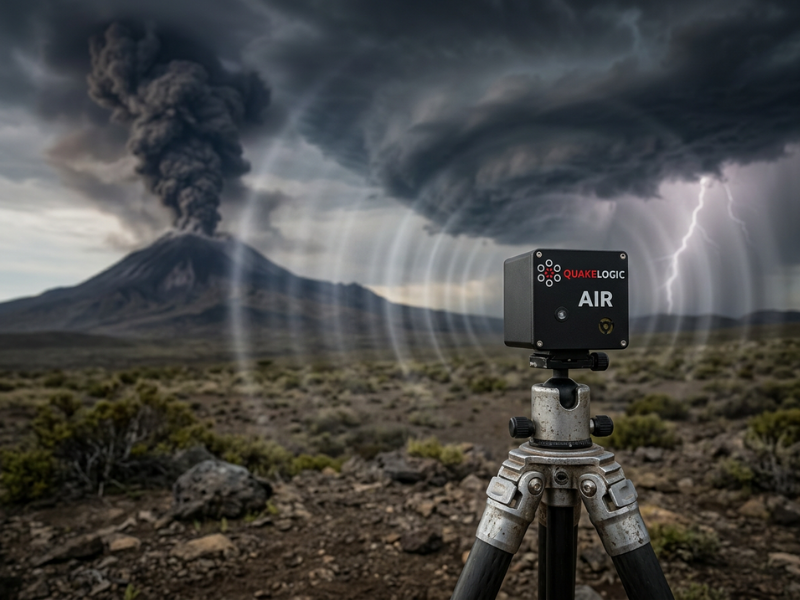
- Infrasound monitoring — explosion, volcano and bolide detection, industrial noise compliance.
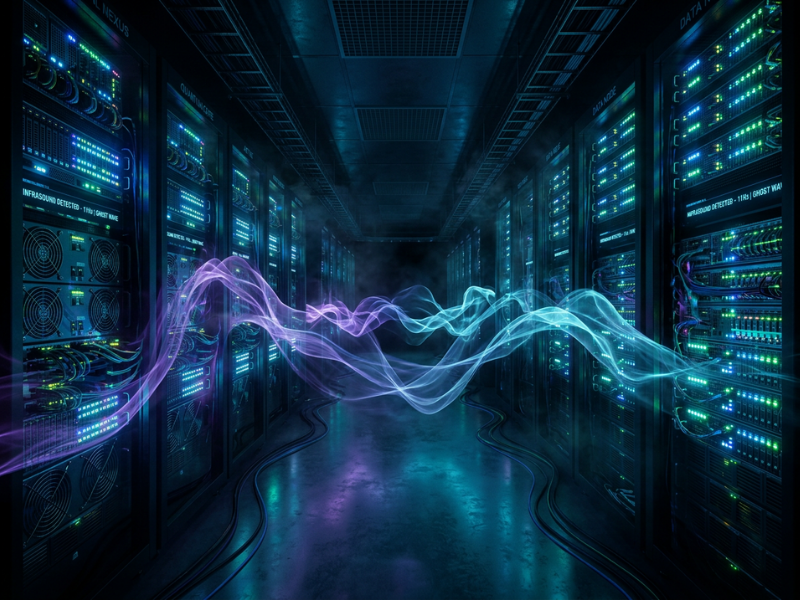
- AI data center noise monitoring — continuous retention and analysis of low-frequency cooling-system noise; see our guide on AI data center infrasound monitoring.
- Academic and government research in seismology, geophysics and SHM.
Further Reading
- AI Data Centers: Infrasound Noise Monitoring
- AI Data Centers & Low Frequency Noise
- The Silent Disruptor: Managing AI Data Center Noise
- What Can Infrasound Detect? Applications & Devices
Related Categories
Integration & support
Integration & Compatibility
QuakeVault integrates with standard seismological infrastructure: the embedded wave server is SeedLink-compatible and interoperates with Earthworm, FDSN Web Services and Winston protocols, and the analytics suite imports SAC, SEED, miniSEED, SEISAN, MATLAB text and WIN files. Events export in QuakeML for interoperability with global databases. The RESTful API enables integration with SCADA, alerting and cloud systems.
Related Products
- Quakecore-Edge – SHM Server with GUI & API
- QuakeLogic AIR 2.0 – Affordable Powerful Easy-to-Use Infrasound Monitor
- QL-WNS-01: Infrasound Sensor Wind Noise Screen
- Custom-Designed Plenum-Rated, Shielded Sensor Cable with Mil-Spec Connector
- Mitigator – Elevator Seismic Switch
Warranty & Support
QuakeVault is covered by QuakeLogic’s standard hardware warranty with remote diagnostics and OTA software updates. Training, commissioning, and extended support plans are available — contact sales@quakelogic.net or call +1 916-899-0391.
Downloads & documentation
For manuals, CAD drawings or configuration-specific documentation, contact sales@quakelogic.net.
Frequently asked questions
What is QuakeVault?
QuakeVault is a rugged, fanless edge server that permanently archives seismic, infrasound and structural health monitoring data and serves it in real time. It combines RAID 1 mirrored SSD storage, an embedded SeedLink-compatible wave server, a web dashboard and a RESTful API in one industrial unit.
Which data formats and protocols does QuakeVault support?
Data is archived in time-indexed MiniSEED format. The wave server is SeedLink-compatible and interoperates with Earthworm, FDSN Web Services and Winston protocols. The analytics suite also imports SAC, SEED, miniSEED, SEISAN, MATLAB text and WIN files, and exports events in QuakeML format for interoperability with global seismic databases.
How does QuakeVault protect my data?
Waveform data is written simultaneously to two 1TB SSDs in a RAID 1 mirror, so a single drive failure causes no data loss. The system adds SSH access control, a firewall and VPN support, and DataHub automatically recovers client connections after network interruptions.
Can QuakeVault be used for infrasound and AI data center noise monitoring?
Yes. QuakeVault is offered in an Infrasound Monitoring configuration and pairs naturally with the QuakeLogic AIR 2.0 infrasound monitor. It archives and analyzes low-frequency acoustic data for applications such as AI data center noise monitoring, industrial noise compliance, volcano and explosion detection.
Can I access QuakeVault remotely?
Yes. The web dashboard provides real-time waveform preview, alerts and system health from any browser, and the RESTful API supports programmatic data queries and system control. Gigabit LAN is standard, with optional Wi-Fi or 4G LTE for remote stations, and firmware updates are delivered over the air.
What analytics software is included?
QuakeVault includes the Real-Time Wave Analytics suite: helicorder, wave, spectra, spectrogram and particle-motion views, Butterworth filtering, RSAM with alarm thresholds, P/S/coda phase picking, coda and duration magnitudes, S-P distance mapping, Hypo71 event location, interactive station maps and a full-screen Kiosk Mode for control rooms.

Specifying QuakeVault for your network?
Our engineers help with station design, sensor pairing, data-flow architecture and commissioning — from a single SHM installation to a national seismic network.

Further reading
AI Data Centers: Infrasound Noise Monitoring
How sub-audible noise from AI data center cooling systems degrades hardware and disturbs communities, and how continuous infrasound monitoring detects it in real time.
2 min read
What Can Infrasound Detect? Applications & Devices
A practical guide to infrasound: detecting volcanic eruptions, earthquakes, explosions, industrial noise and structural damage with professional low-frequency monitoring.
2 min read